If you want your next Robson Ranch home to be your last move, the right floor plan matters. You’re picturing easy daily routines, safe spaces for guests, and a home that adapts gracefully over time. In this guide, you’ll learn the key features, measurements, and checklists that help you choose a plan that supports aging in place, with Denton-specific tips to simplify upkeep and comfort. Let’s dive in.
What aging in place means at Robson Ranch
Aging in place is about keeping your independence while reducing friction in daily life. In a 55+ community like Robson Ranch, many plans already lean toward single-level living and low maintenance. Your goal is to match a specific plan and options to long-term needs, not just short-term style.
Keep these core objectives in mind:
- Reduce fall risk and physical barriers.
- Preserve independence and support future in-home care if needed.
- Minimize maintenance inside and out.
- Build flexibility so the home adapts to changing mobility or health.
Floor plan features that matter
Entry and circulation
- Single-level living: Choose a plan with all primary living spaces and at least one bedroom and full bath on the main level.
- No-step entry: Target a zero-step or low-threshold entry from the driveway, garage, or porch. This reduces trip risk and eases wheelchair or walker use.
- Door widths: Aim for at least 32 inches clear, with 36 inches preferred for maneuverability.
- Hallways: 36 inches minimum; 42 to 48 inches is more comfortable for two-way traffic and mobility devices.
- Turning space: A 60-inch diameter turning circle in key rooms helps with wheelchair navigation.
These targets align with AARP and ADA guidance and serve as practical benchmarks when you review plans or tour models.
Interior finishes and lighting
- Flooring: Choose continuous, low-profile hard surfaces like luxury vinyl plank or tile. Avoid thick carpeting and abrupt transitions that increase trip risk.
- Thresholds: Keep level changes to a minimum and use beveled transitions where needed.
- Hardware and controls: Lever-style door handles and rocker or touch light switches are easier to use. Place controls within a comfortable reach range of roughly 36 to 48 inches above the floor.
- Lighting: Use layered lighting with even, low-glare illumination to improve visibility and reduce falls.
Kitchen design
- Maneuvering space: Look for open layouts with clear floor space of about 30 by 48 inches in front of major appliances.
- Counters: Standard 36-inch counters work for most people. Consider a portion at 28 to 34 inches for seated prep.
- Appliances: Side-opening or wall ovens at reachable height, drawer-style dishwashers, and easy-to-read controls simplify daily use.
- Faucets: Single-lever handles and pull-out sprayers reduce strain.
Primary suite and bathrooms
- Main-level access: Ensure the primary bedroom connects to a full bath on the main level.
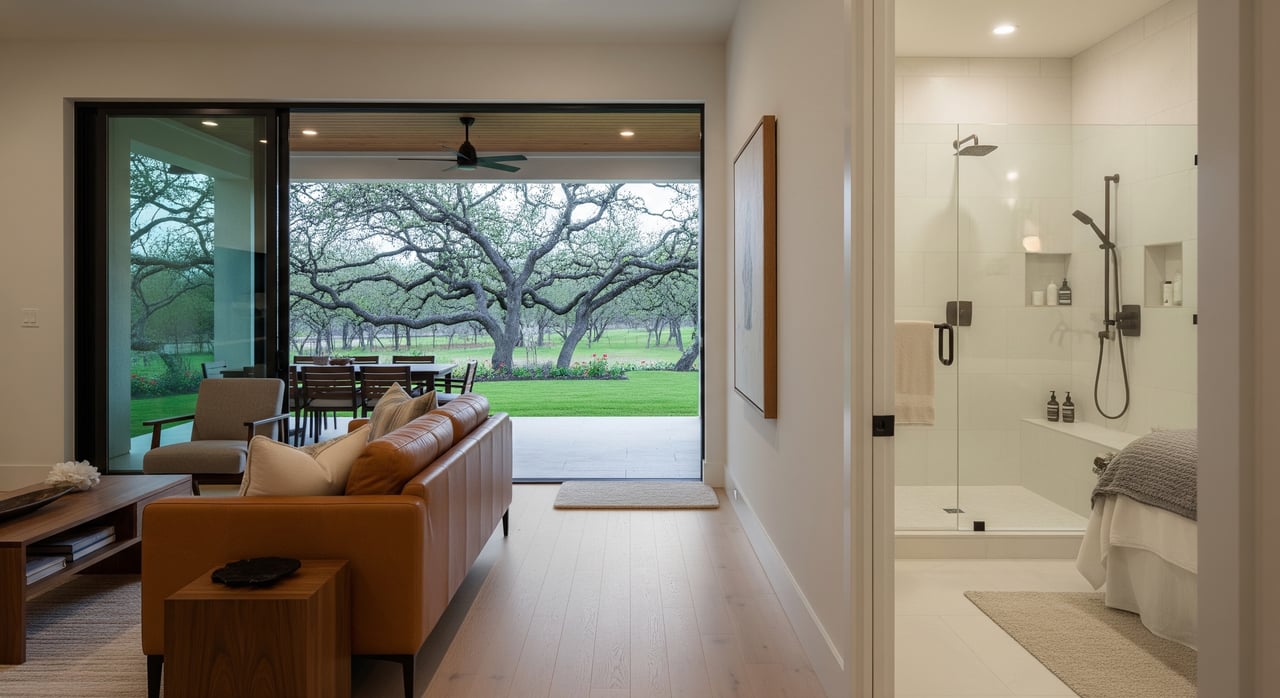
- Shower: Prioritize a curbless or low-threshold shower. Plan for grab bars, a built-in or fold-down seat, and a handheld shower head.
- Reinforcement: Ask for blocking in the shower and near the toilet to support future grab-bar installation.
- Toilet height: “Comfort height” toilets at 17 to 19 inches are easier for many users.
- Clearances: A 60-inch turning circle in the primary bath supports full accessibility if needed later.
Bedrooms and storage
- Access: Keep the primary bedroom close to the main living areas to reduce walking distance.
- Closets: Seek reachable shelving and space that allows seated dressing. Larger closets can store mobility devices or caregiver supplies if needed later.
Laundry and garage
- Laundry: Place laundry on the main level with enough room to maneuver and a counter height that supports seated tasks.
- Garage connection: Look for a level, wide doorway from garage to house. Reserve space for mobility aids and consider electrical capacity for future needs like backup power or EV charging.
Outdoor living and maintenance
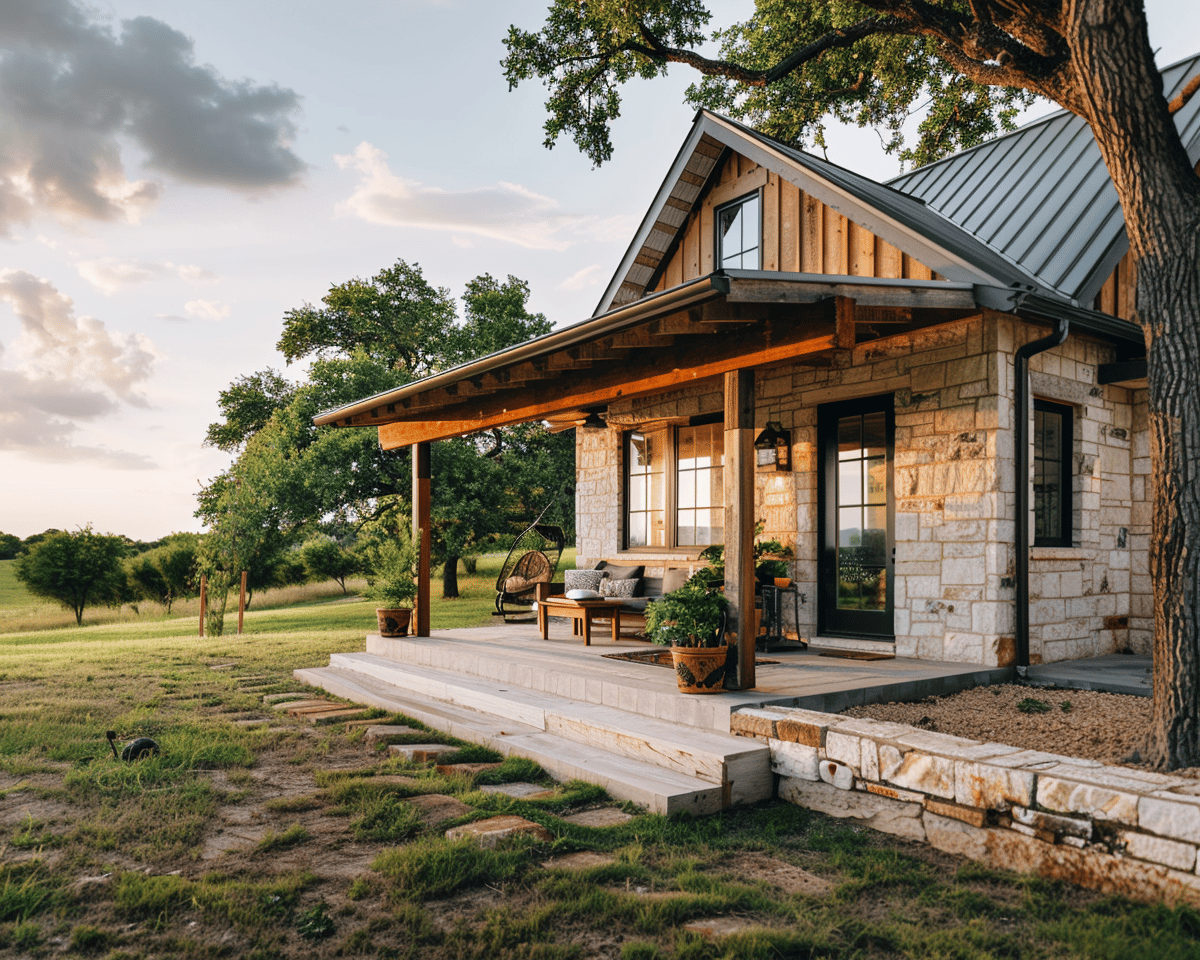
- Surfaces: Choose even, non-slip pathways with 36 to 48 inches of width and gentle grades. Covered entries and good exterior lighting improve safety.
- Landscaping: In Denton County’s hot summers, favor native or drought-tolerant plantings, mulched beds, drip irrigation, and permeable hardscape. This reduces watering and mowing while keeping outdoor spaces usable.
- Energy and weather: Shade, energy-efficient windows, and correctly sized HVAC help manage heat. Plan for secure outdoor items and no-slip exterior surfaces during storms.
How to evaluate Robson Ranch floor plans
Before your tour
- Request floor plan sets with door and hall widths, bathroom sizes, and elevation details.
- Ask about aging-in-place options such as zero-step entries, wider doors, curbless showers, and wall reinforcement for grab bars.
- Confirm what the HOA or builder covers for exterior upkeep, lawn care, irrigation, or exterior maintenance packages.
On-site tour checklist
Bring a tape measure or ask for measurements. Look for:
- Entry: Steps, thresholds, and height differences at all entrances.
- Doors: Widths for entry, bedrooms, bathrooms, and garage-to-house connections.
- Halls: Approximate hallway width and ability for two people to pass.
- Primary suite: Bedroom on the main level with direct access to a full bath.
- Bathroom layout: Space to add or upgrade to a zero-threshold shower; blocking for grab bars.
- Flooring transitions: Raised edges, thick rugs, or abrupt changes between surfaces.
- Kitchen: Clear floor space near sink, oven, and fridge; lighting quality; pull-out shelves.
- Garage: Any step up into the home, door width, and maneuvering space.
- Outdoor areas: Path widths, surface condition, irrigation presence, and yard size relative to your maintenance goals.
Comparing plans and trade-offs
- Square footage vs. flow: Larger is not always better. Check hall widths, turning space, and how furniture will sit in an open plan.
- Single-level vs. two-level: A two-level with elevator prep can work. If aging in place is your top priority, most buyers still prefer single-level plans to remove stairs.
- Storage vs. upkeep: Bigger yards mean more work. Confirm HOA coverage and costs so your landscape is manageable.
- Future-proofing: Features like wider doors, curbless showers, and blocking for grab bars are far cheaper to include at build than to retrofit later.
Denton-specific considerations
- Climate: Hot, dry summers favor waterwise landscaping and shaded outdoor living. Choose plant palettes and irrigation strategies that minimize weekly maintenance.
- HOA rules: Active-adult communities may set guidelines on hardscaping, plant selections, or exterior modifications. Verify rules before planning xeriscaping, artificial turf, or patios.
- Health care access: Many buyers feel most comfortable within a 10 to 20 minute drive of primary care, urgent care, and hospital services. Factor your preferred providers into location and lot selection.
- Emergency readiness: Ask about electrical capacity for backup power, especially if you rely on medical devices. Choose no-slip exterior surfaces and plan for secure storage of outdoor items during storms.
Smart sequencing: what to include now vs. later
- Install now: Structural or hard-to-change items such as zero-step entries, wider doors, curbless showers, and wall blocking for grab bars. These are simpler and less costly during construction.
- Add later: Lever handles, handheld showerheads, pull-out shelves, and smart lighting. These updates are easy and low-cost when needs change.
Sample upgrade path for peace of mind
- Day one essentials: No-step entry, continuous flooring, bright and even lighting, lever handles, and a shower with handheld sprayer.
- Year 1 to 3: Add pull-out shelves, seated-height prep space, and task lighting in the kitchen. Simplify landscaping with mulch and drip irrigation.
- Year 3 to 5: If needed, add grab bars to pre-blocked walls, a fold-down shower seat, and additional motion lighting along pathways and at the garage entry.
Next steps
Choosing a Robson Ranch floor plan for aging in place is a mix of smart measurements, simple safety features, and Denton-savvy maintenance choices. When you compare plans with a clear checklist, you avoid costly retrofits and end up with a home that feels effortless for years.
If you want a trusted local partner to help you request the right plan details, validate dimensions, and coordinate vendors for upgrades, the North Texas Team is here to help. Our new construction and 55+ community expertise make the process smooth, from first tour to closing.
Ready to explore floor plans that fit your long-term lifestyle? Schedule a Concierge Consultation with the North Texas Team.
FAQs
What door and hall widths work best for future mobility?
- Target at least 32 inches of clear width for doors and 36 inches for halls. For added comfort, 36-inch doors and 42 to 48-inch main circulation routes are ideal.
Do I need full accessibility features now or can I add them later?
- Install structural items at build, such as curbless showers, wider doors, and wall blocking for grab bars. Smaller upgrades like lever handles and handheld showerheads can come later.
Which exterior features reduce yard maintenance in Denton County?
- Favor native or drought-tolerant plants, drip irrigation, mulched beds, and permeable hardscape. These strategies cut watering and mowing while handling summer heat.
How do I compare Robson Ranch floor plans objectively?
- Use a checklist: single-level living, main-level full bath, door and hall widths, shower type, thresholds, garage entry, and space for future modifications. Rank plans on adaptability and maintenance needs.
What home features most help prevent falls?
- No-step entries, continuous non-slip flooring, good lighting, grab-bar-ready bathrooms, and safe, well-lit outdoor pathways help reduce fall risk.
Is a two-story home ever practical for aging in place?
- It can be, if the primary suite and a full bath are on the main level and the plan allows for elevator prep. Most buyers still prefer single-level to remove daily stair use.
What should I ask the HOA before planning landscape changes?
- Confirm allowed plant palettes, hardscaping rules, irrigation standards, and whether lawn care is included or available as an add-on. This avoids surprises and controls maintenance costs.