
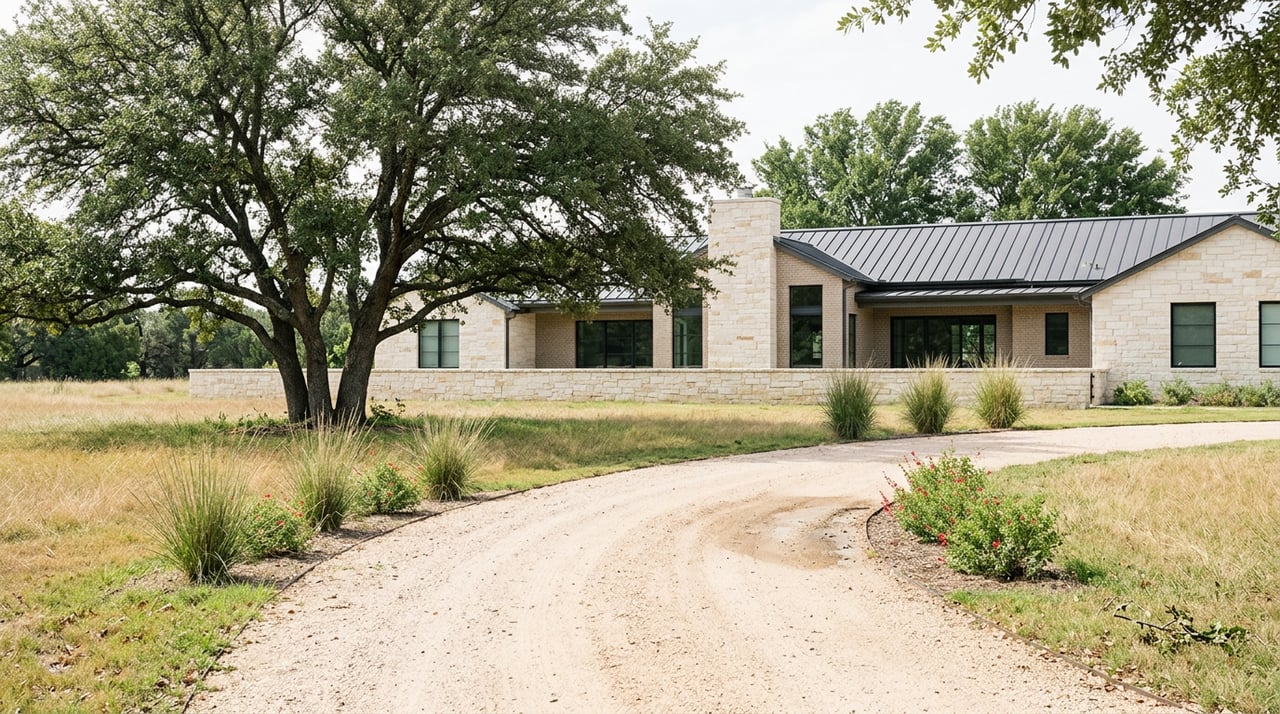
The listing says "ag exempt." The tax line at the bottom of the MLS sheet shows a few hundred dollars a year on a property the seller wants two million for. A buyer new to Denton County looks at that number and prices the carry accordingly. Two closings later, the appraisal district sends a notice that the productivity valuation has been removed and the new market value is on the roll. The annual tax bill is now in the tens of thousands, and a rollback assessment is attached.
That gap between what the listing shows and what a new owner actually inherits is the single most misread number in Argyle-area farm and ranch transactions. The agricultural valuation is not a discount that runs with the deed. It is a conditional appraisal that resets at the closing table, and the mechanics of whether it survives your ownership are set by Denton Central Appraisal District, not by the seller.
The Reset That Happens at Closing
Texas law calls the ag exemption a "1-d-1 open-space" appraisal, which taxes qualifying land on its productive value instead of market value. That is why a $2M tract can carry a productivity value closer to $16,000 on the tax roll. But the special appraisal is tied to the operator's use of the land, not to the parcel itself. Any change in ownership requires the new owner to submit a new agricultural exemption application, and the county appraisal district office manages every step of that process.
For a buyer, closing triggers three separate clocks:
- The Denton CAD application window runs January 1 through April 30 for the current tax year.
- The land must show a five-of-the-past-seven-years history of qualifying agricultural use to remain eligible, meaning your seller's documentation matters as much as your intentions.
- Any period where the land sits idle after closing, without livestock, hay production, or another qualifying use at the required intensity, is a period where the exemption is at risk.
That last point is the one buyers miss. Buying an ag-exempt tract in June and getting the fences and cattle in place by October is not the same as maintaining continuous use. The appraisal district can request a new application at any time, and if the property does not meet the standard, the exemption comes off.
What "Degree of Intensity" Actually Means Here
Denton County is unusual for a North Texas jurisdiction. Zach Davis, the local Texas A&M AgriLife Extension agent, has publicly described Denton as a favorable county for pursuing an ag exemption because it does not set a fixed minimum acreage except for beekeeping. What Denton CAD does apply is the "prudent manager" test: would a reasonable rancher or farmer operate this piece of land the same way you are proposing to operate it?
That test has real teeth. Ten cows that never calve are not producing a commodity. A field mowed once a year is not a hay operation. Horses on pasture do not qualify unless there is a genuine breeding operation with offspring sold. The intensity standard is why two neighbors on identical five-acre tracts can end up with wildly different tax bills.
Compare how three North Texas counties handle the same question:
| County | Published minimum acreage | Livestock intensity standard |
|---|---|---|
| Denton | None, except beekeeping | Prudent manager test, case by case |
| Collin | No single hard minimum | Two animal units maintained year-round |
| Wise | Over 5.01 acres for ag, over 14.30 acres for wildlife | Published animal-unit ratios by land class |
Denton's flexibility cuts both ways. A five-acre owner with a serious hobby-farm operation can qualify where they would fail in Wise. A twenty-acre owner running two token steers can lose an exemption their neighbor keeps. Denton CAD has been working on tightening the written "degrees of intensity" guidelines specifically so new property owners have clearer expectations before they buy, per prior reporting in the Denton Record-Chronicle.
The Rollback Math That Reshapes a Deal
Here is where the transaction friction gets expensive. If the land loses its ag valuation, whether because the new owner never reapplied, failed the intensity test, or physically converted the use, a rollback tax is triggered. Under Texas Tax Code Section 23.55, that rollback covers the previous three years of the difference between taxes paid on productivity value and taxes that would have been assessed at market value.
House Bill 3833, effective June 15, 2021, cut the rollback period from five years to three and removed the automatic interest penalty that used to apply on top. That is a meaningful improvement, but the underlying number is still large because Argyle-area land prices have climbed faster than most buyers realize. Recent aggregated listing data for Argyle-area farmland puts the average asking price near $200,000 per acre, and hobby-farm inventory sits close to $197,000 per acre.
Run the math on a stylized tract to see the exposure:
Market value: $2,000,000. Productivity value: $16,000. Local tax rate: about 2.2%. Annual taxes at productivity value: $352. Annual taxes at market value: $44,000. Three-year rollback exposure: roughly $130,944.
That figure is not hypothetical. It is the arithmetic of the current statute applied to a typical Argyle-area valuation. And because a tax lien attaches to the land on the date the use changes, the liability follows the parcel until it is paid.
Who pays that bill is negotiable, but by default it lands on the party whose actions caused the change of use, which is almost always the buyer post-closing. Getting a rollback allocation into the contract, along with a seller representation about the five-of-seven-years use history, is one of the highest-leverage moves in a Denton County farm and ranch deal.
Argyle-Specific Friction the Exemption Does Not Cover
Even if the ag valuation transfers cleanly, buying acreage inside the Argyle ISD footprint carries operational friction that the exemption line item does not disclose. The Town of Argyle enforces low-density zoning and tree preservation rules aimed at protecting its rural character, which is part of what draws buyers to begin with, and also constrains what an owner can do post-closing without triggering a use change.
Most tracts above five acres in the area sit outside city sewer service. That means an aerobic septic system is standard, with its own permitting and maintenance timeline. Argyle Water Supply Corporation serves much of the acreage, but on tracts of fifteen acres and up, a private well is often the more economical option for irrigation and livestock water. A private well on a working ranch is also documentation that supports the productivity claim if Denton CAD ever asks for it.
None of these items appear on the appraisal notice. All of them affect whether the ag exemption stays intact through your first three years of ownership.
What to Do Before You Sign
For a buyer moving toward a farm and ranch contract in the Argyle corridor, the transaction moves that matter are the ones taken before the option period ends:
- Request the current 1-d-1 application on file, plus any correspondence with Denton CAD, from the seller.
- Confirm the five-of-seven-years use history with dated records: lease agreements, cattle sales receipts, hay invoices, or beekeeping logs.
- Get a written seller representation about the current use and the absence of any pending change-of-use notice.
- Model the rollback exposure at market value, then negotiate who covers it if triggered within a defined post-closing window.
- Calendar the January 1 to April 30 reapplication window for the year following closing, with a specific plan for how you will meet the intensity standard by that date.
- If you are converting from cattle to horses, hay to wildlife management, or grazing to a homestead footprint, price the rollback into your acquisition budget as a known cost, not a surprise.
FAQ
Does the ag exemption automatically transfer when I buy the property? No. The valuation is tied to use, and Denton CAD requires the new owner to submit a fresh application. The land's use history helps you qualify, but nothing carries over automatically.
If I keep the same tenant rancher who leased from the seller, do I still need to reapply? Yes. The application is tied to the owner of record, not the operator. Continuing the same lease is strong evidence for intensity and history, but it does not replace the filing.
Can I lose the exemption without physically changing anything on the land? Yes. If the appraisal district determines that the intensity of use has fallen below the prudent-manager standard for the area, the exemption can be removed. A change of use is what triggers the rollback specifically, but eligibility can be lost on intensity grounds alone.
Buying Farm and Ranch in Argyle With Eyes Open
The ag exemption is one of the most valuable line items on a North Texas land purchase, and one of the most fragile. Getting it to survive your closing takes deliberate work in the contract, at Denton CAD, and on the land itself during your first full year of ownership.
If you are evaluating a specific tract in the Argyle ISD footprint, the North Texas Team works these deals with the documentation, vendor coordination, and appraisal district relationships that keep the exemption intact through the transaction. Explore current Argyle-area farm and ranch inventory, or Schedule a Concierge Consultation to walk through a specific parcel before your option period closes.